Can You Damage Paint with Too Much Pressure Washing?

Topics Covered:
- Why pressure washing can be risky for car paint
- The difference between safe and harmful pressure levels
- Signs your paint has been damaged by pressure washing
- How professionals safely pressure wash cars
- Alternatives to high-pressure washing
- FAQs about car washing and paint care
Introduction: Pressure Washing – A Friend or Foe for Your Car Paint?
Pressure washers are powerful tools. They can remove stubborn grime and dirt from driveways, decks, and even vehicles. But here’s the catch: when misused, they can also strip clear coats, chip paint, and leave lasting damage.
As more Frisco, TX, drivers turn to DIY car washing, it’s important to understand how much pressure is too much. The goal is to clean efficiently, not aggressively. At Mobile Detailer Frisco, we often see cars with dull, uneven paint simply because the wrong water pressure was used.
Let’s look at how to strike the right balance between power and paint protection.
Understanding the Science of Pressure Washing
Pressure washers use water expelled at high speed to dislodge dirt. This power is measured in PSI (pounds per square inch), and that number determines whether you’re cleaning effectively or causing damage.
Safe Pressure Levels for Cars
- Ideal range: 1,200–1,900 PSI
- Danger zone: 2,000 PSI and above
Anything higher can tear through the clear coat or lift the paint on vulnerable spots like door edges and bumpers.
Why Too Much Pressure Damages Paint
When the stream hits your car’s surface too forcefully:
- The clear coat softens and chips
- Microcracks in paint expand
- Water forces contaminants deeper into the surface
- Protective wax or ceramic layers are stripped away
Even a few seconds of high-pressure exposure can create swirl marks or oxidation over time.
Common Signs of Paint Damage from Pressure Washing
Many drivers don’t realize their paint has been compromised until it’s too late. Here’s what to watch out for:
- Faded or dull areas on the paint surface
- Small chips or peeling edges around panels
- Uneven gloss or rough texture when you run your hand over the paint
- Visible swirl marks under sunlight
- Water spots that won’t come off even after drying
If you notice any of these, it may be time for a professional paint correction or polishing service.
The Right Way to Pressure Wash a Car Safely
Professional detailers follow strict guidelines to ensure paint safety. The process is not about blasting dirt off; it’s about loosening it gently without abrasion.
Step-by-Step Safe Pressure Washing Method:
- Pre-Rinse the Vehicle: Start with a wide-angle nozzle (40°) to remove surface dust.
- Use the Right Distance: Keep the nozzle at least 2 feet from the paint surface.
- Apply Foam or Car Shampoo: Use a foam cannon to break down grime before using pressure.
- Rinse Gently: Stick to 1,200–1,500 PSI for rinsing.
- Dry with Microfiber Towels: Never air dry; it can leave water spots or mineral residue.
At Mobile Detailer Frisco, we rely on soft water pressure systems combined with pH-balanced car wash soaps. This ensures every vehicle gets a thorough clean without a single scratch.
Pressure Washing vs. Soft Cloth Car Wash -Which Is Better?
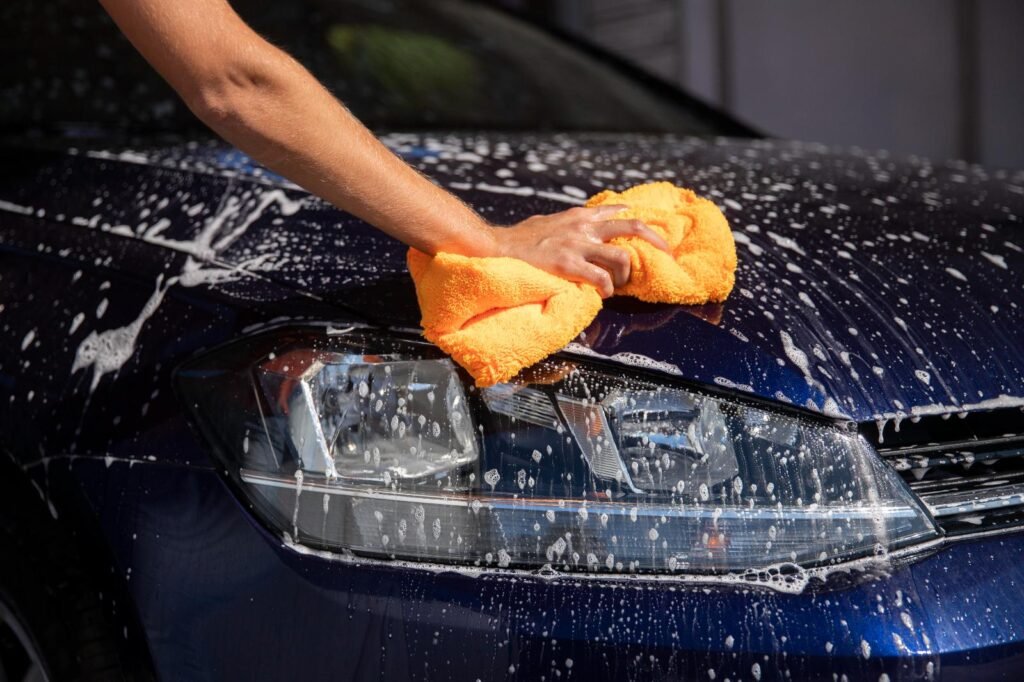
Pressure washing is fast but risky in untrained hands. Soft cloth car washes, on the other hand, use friction and water in a controlled environment.
Pros of Soft Cloth Car Wash:
- Gentle on paint
- Removes dirt evenly
- No risk of paint chipping
- Better for long-term shine
If you’re interested in learning more, check out our related post on Why Professional Car Detailing in Frisco TX Is Worth Every Penny, which explains how professional detailing preserves both paint and value.
How Professionals Measure Pressure and Paint Safety?
Experienced detailers don’t guess; they measure. Professionals use paint thickness gauges to understand how much clear coat remains before washing or polishing.
Professional Safety Practices Include:
- Testing pressure before applying water to paint
- Using fan spray nozzles (25–40°) for even coverage
- Avoiding direct sprays on edges, emblems, or decals
- Maintaining optimal water temperature (below 140°F)
These small steps prevent long-term paint degradation and preserve the glossy finish every Frisco driver loves.
Alternatives to High-Pressure Washing
If you’re hesitant to use a pressure washer, there are several effective and safer alternatives.
Safe Car Washing Methods:
- Two-Bucket Method: One bucket for clean water, one for rinse water, reduces swirl marks.
- Foam Cannon Wash: Creates a thick layer of foam to lift dirt before rinsing.
- Rinse-less Wash: Perfect for light cleaning between full details.
- Mobile Professional Detailing: Experts handle the entire process safely using controlled pressure systems.
Each of these methods keeps your car spotless without the risk of damaging the paintwork.
Why DIY Pressure Washing Isn’t Always Worth the Risk
While pressure washers look simple to use, most DIY users overlook nozzle size, angle, and PSI control. A single mistake, like standing too close or using a 0° nozzle, can leave permanent scars on your car’s paint.
Professional detailers like Mobile Detailer Frisco invest in calibrated tools, paint-safe techniques, and protective products to ensure a safe, spotless finish every time. In short, precision matters more than power when it comes to car washing.
Maintenance Tips After Pressure Washing
Once your car is safely washed, maintaining its shine is just as important.
Expert Tips:
- Apply a protective wax or sealant every 3–4 months
- Avoid washing under direct sunlight
- Use microfiber mitts instead of sponges
- Rinse off bird droppings or sap immediately
- Schedule professional detailing twice a year
These habits protect your paint from Texas heat, UV rays, and premature fading.
FAQs
1. Can a pressure washer remove my car’s clear coat?
Yes. Using more than 2,000 PSI or spraying too close can strip the clear coat, exposing the paint underneath.
2. What PSI is safe for washing a car?
Between 1,200 and 1,900 PSI is generally safe, depending on the nozzle and distance used.
3. Should I pressure wash my engine bay?
No. High-pressure water can damage sensors and wiring. Always have engines cleaned professionally.
4. Can I pressure wash a ceramic-coated car?
Yes, but with care. Use low pressure and avoid harsh angles to maintain coating longevity.
5. Is mobile detailing safer than pressure washing at home?
Absolutely. Professionals use low-pressure equipment and specialized soaps designed to clean without harming paint.
Conclusion: Gentle Power Always Wins
Pressure washing can be your car’s best friend or worst enemy, depending on how it’s used. Too much pressure can ruin the paint, while the right technique can make your car gleam like new.
For Frisco drivers who value their vehicles, the safest and smartest option is professional mobile detailing. With expert pressure control, quality products, and years of experience, Mobile Detailer Frisco ensures your paint stays flawless and protected for the long haul.
Because when it comes to car care, the goal isn’t power, it’s precision.